
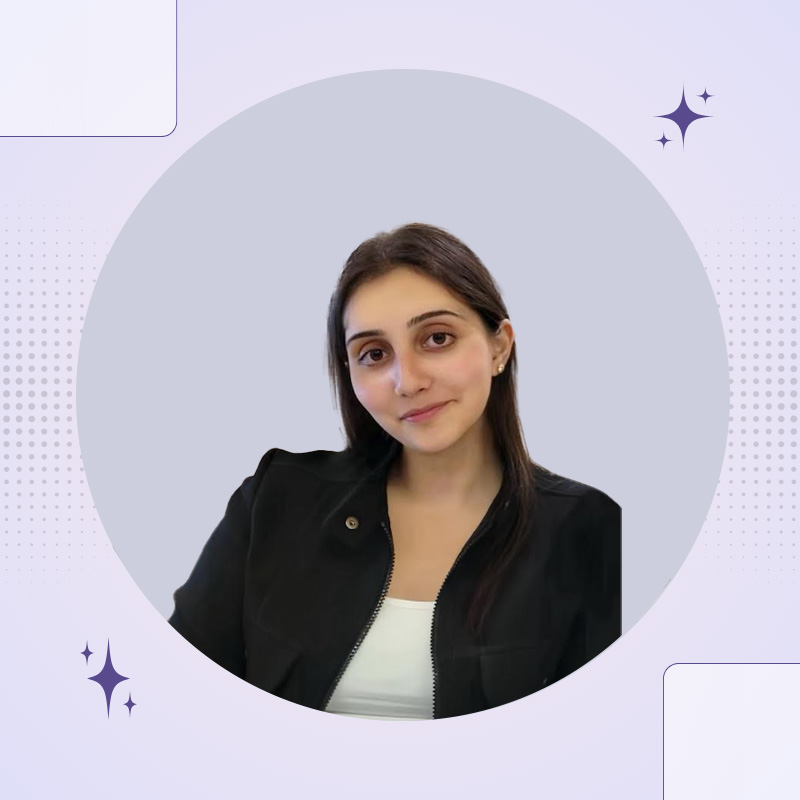
Personal Info
Asmi Khanna is a fourth-year undergraduate student at the University of Toronto, specializing in Neuroscience with a major in Molecular Biology. Her work focuses on advancing equitable and culturally responsive approaches to brain health, with a focus on dementia prevention and treatment.
She currently serves as a Volunteer Research Assistant and Volunteer Engagement Lead at ClarityPath, where she supports ongoing research initiatives and leads the onboarding and engagement of volunteer team members. Her academic training and applied experiences span several areas of brain health, with primary research interests in neuromodulation and psychotherapy for the
treatment of depression, motoric cognitive risk syndrome, mild cognitive impairment, and other forms of cognitive aging. Asmi is also deeply committed to understanding and improving the lived experiences of individuals with dementia in rural, Indigenous, racialized, and other historically marginalized communities, with the goal of informing care models rooted in cultural
understanding and health equity.
As a recipient of the Canadian Consortium on Neurodegeneration in Aging (CCNA) Undergraduate Summer Trainee Award, Asmi conducted research on cognitive protection and treatment strategies for depression, a major modifiable risk factor for dementia. She has contributed to research and clinical initiatives at leading healthcare institutions, including Ontario Shores Centre for Mental Health Sciences, Baycrest Hospital, and the Hospital for Sick Children (SickKids). Beyond her academic work, she is actively involved in science communication and community health education. Through leadership roles in student organizations, she develops and delivers youth-centered workshops that promote early health literacy and help reduce stigma surrounding medical and cognitive conditions. These initiatives reflect her broader commitment to translating research into inclusive, culturally informed outreach with real-world impact.
Outside the lab, Asmi is equally dedicated to global health equity. As a Volunteer Clinical
Assistant with Global Medical Brigades in rural Guatemala, she helped deliver care through a temporary medical clinic serving an Indigenous community with limited access to healthcare. Her role involved patient intake, clinical translation, and conducting door-to-door surveys on household health and living standards. This experience deepened her understanding of the systemic inequities, such as geographic isolation, under-resourced health systems, and cultural barriers, that affect health outcomes. It further reinforced her commitment to advancing inclusive care models that center the voices, needs, and strengths of underserved communities both locally and globally.
In addition, she has contributed to research and clinical initiatives at Ontario Shores Centre for Mental Health Sciences, Baycrest Hospital, and the Hospital for Sick Children (SickKids), further
broadening her exposure to diverse aspects of brain and mental health care.